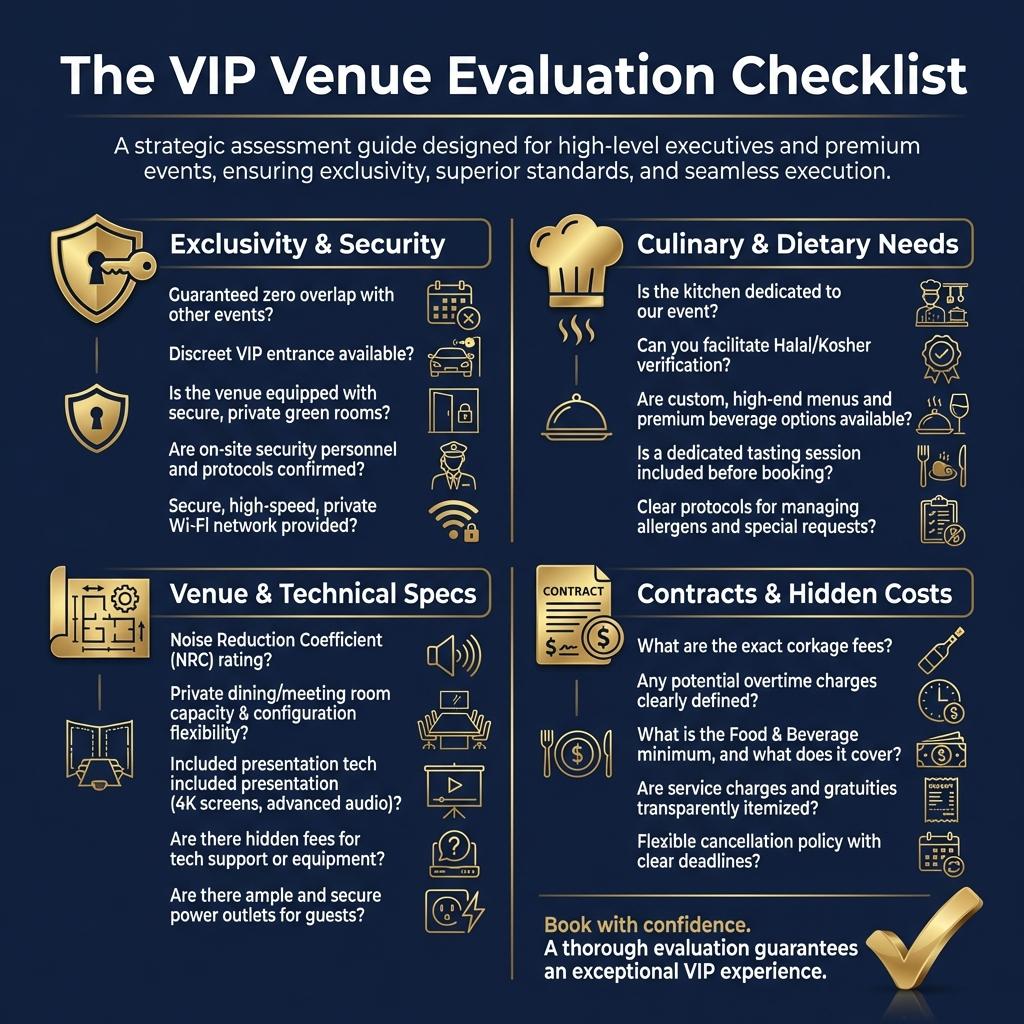
When to Choose a Private Venue Over a Hotel: Decision Matrix
If your event meets two or more criteria—confidentiality priority,
cultural/dietary complexity, or 15-25 guest intimacy—a private venue likely outperforms hotel
ballrooms.
The decision framework centers on three factors. First, confidentiality priority: when
discussion topics involve M&A strategy, legal matters, or proprietary information, and when attendees
must not be photographed together due to competitive concerns, information leakage risk outweighs hotel
convenience. Choose venues with soundproofing, restricted access, and zero overlap with other events.
Second, cultural/dietary complexity: when multiple religious requirements (Halal +
Kosher + Vegan) must be accommodated simultaneously, when cross-contamination risk is unacceptable, or
when prayer space or specific cultural protocols are required, choose venues with dedicated kitchens and
flexible layouts that hotels cannot guarantee.
Third, intimate group size (15-25 guests): when hotel ballrooms feel empty or impose 50+
minimums, when restaurant private rooms are too cramped (6-12 max), and when you want "executive
boardroom" intimacy rather than "conference hall" scale, boutique private venues purpose-built for this
range deliver superior experiences.
Conversely, if your event serves 50+ guests, is public-facing, or has standard dietary
needs, hotels may offer better economies of scale through bulk catering and established
service teams. The venue decision must align with event objectives—prioritizing relationship quality
over cost efficiency for high-stakes VIP hospitality.
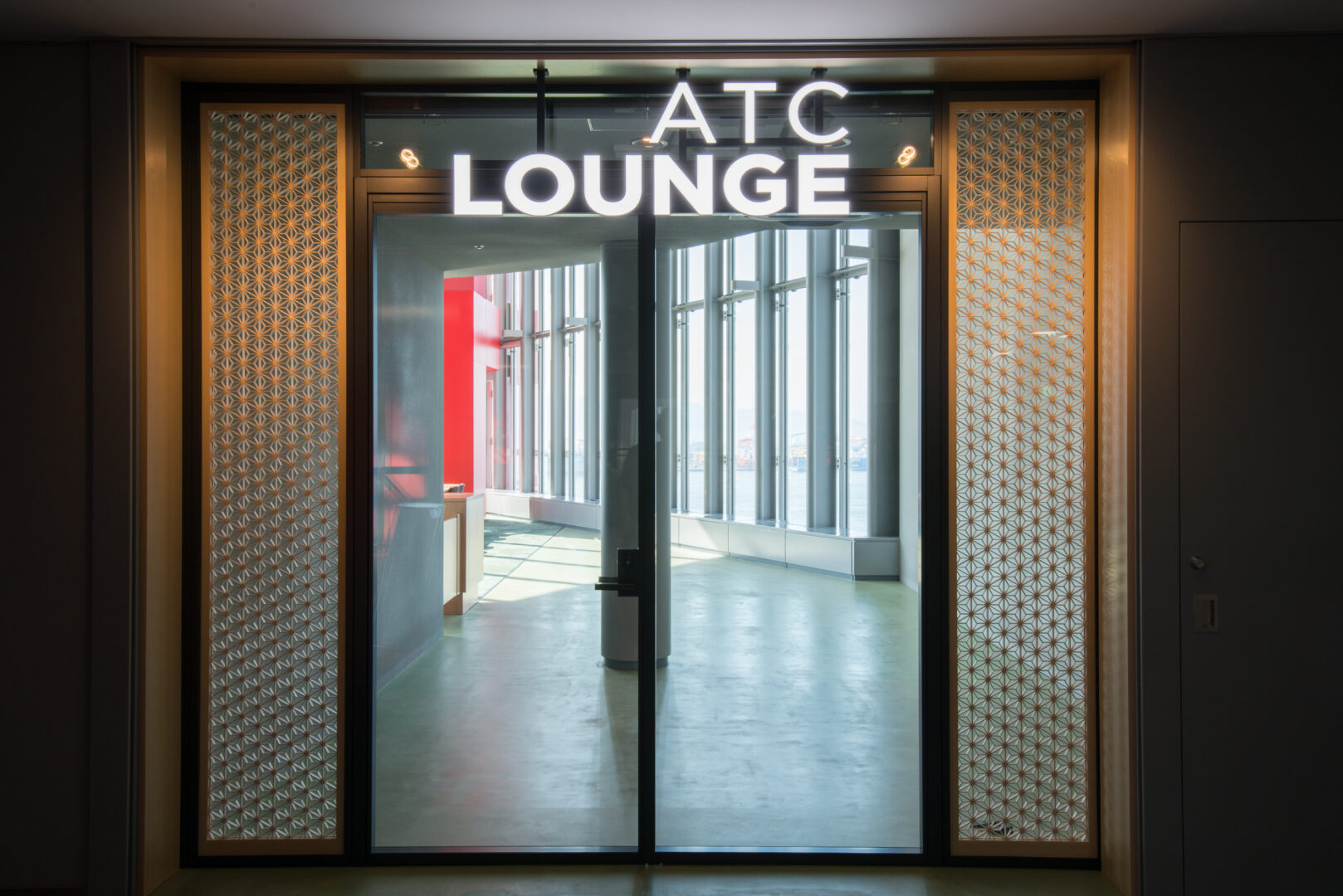
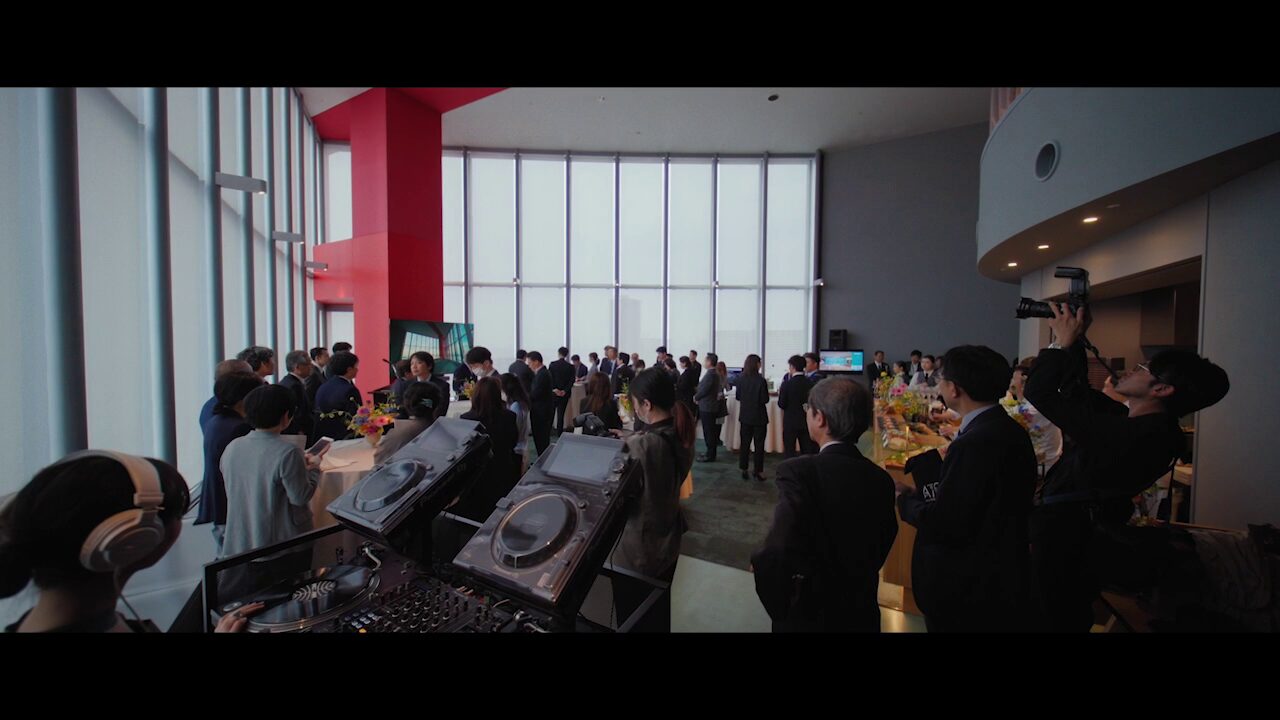
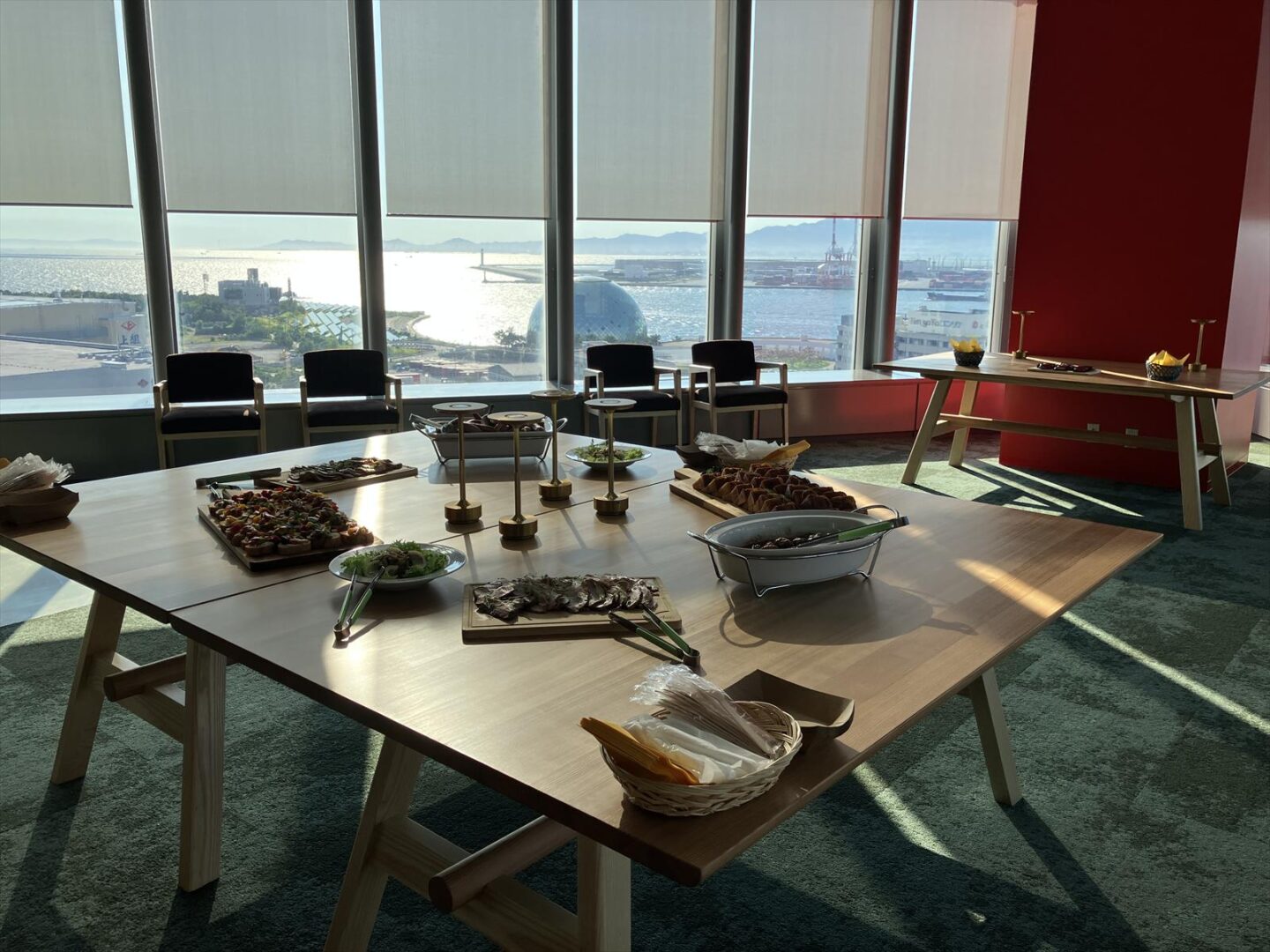
For Osaka Bay venues like ATC Lounge, the 160㎡ space
accommodates 15-25 guests optimally—large enough to feel significant, intimate enough for
meaningful conversation. Pricing transparency matters: venue-only rentals typically range
¥180,000-200,000, while full culinary packages with external catering reach ¥300,000+—comparable to
hotel ballroom base rates before hidden AV rental, corkage, and overtime fees compound final costs.
Budgeting Transparency: True Cost Comparison
Hotel banquets advertise lower base rates but accumulate hidden fees (AV
rental, corkage, overtime) that private venues avoid through transparent all-inclusive pricing
structures.
Hotel ballroom pricing often obscures total costs through separate line items. AV equipment
rental (projectors, microphones, screens) adds ¥50,000-100,000 to base venue fees. Wine
corkage fees of ¥3,000-5,000 per bottle create staggering charges when entertaining wine-focused
clients—a 10-bottle dinner incurs ¥30,000-50,000 in corkage alone, plus the 300-400% markup if
purchasing from hotel wine lists.
Overtime charges penalize events running beyond contracted hours—common when VIP discussions
extend naturally beyond rigid 2-hour windows. Setup and breakdown fees, mandatory service
charges (often 10-15%), and per-person minimum F&B spends further inflate final invoices. For a
20-person VIP dinner, total hotel costs frequently reach ¥400,000-500,000 after all surcharges.
Private venue models offer pricing transparency: venue rental (¥180,000-300,000) plus external
catering (¥10,000-15,000 per person) totals ¥380,000-600,000 for 20 guests, with zero
corkage penalties for bringing preferred wines. This pricing includes full-day access, eliminating
overtime charges, and allows flexible scheduling that accommodates VIP travel delays or extended
discussions.
The ROI calculation extends beyond invoice comparison. Relationship quality, deal closure rates,
and repeat business value matter more than upfront cost savings for high-stakes corporate
hospitality. A private venue enabling 4-hour unrushed discussion in complete privacy delivers higher
strategic value than a 2-hour hotel time slot where conversations feel monitored and rushed.
Operational Logistics: From First Contact to Flawless Execution
Professional private venues provide inquiry-to-execution support including site
visits, chef coordination, dietary verification, contingency planning, and day-of logistics
management.
The venue selection process begins 3-6 months before international conferences—allowing time for
dietary certification verification, cultural protocol documentation, and chef partnership
coordination. Last-minute bookings (under 4 weeks) severely limit customization options and
increase costs as vendors charge premiums for compressed timelines.
Initial inquiry should include: attendee count, dietary restrictions (specific certifications required),
event date flexibility, budget parameters, and confidentiality requirements. Professional venues
respond with floor plans showing capacity configurations, equipment lists detailing
included AV infrastructure, and transparent pricing breakdowns itemizing all fees.
Site visits allow physical inspection of arrival protocols (private entrance vs. shared lobby),
soundproofing quality, kitchen capabilities, and view sightlines. During visits, request
introductions to recommended caterers or chef partners, and discuss contingency plans for weather
impacts (if outdoor elements exist), dietary emergencies, or last-minute guest count changes.
Day-of logistics require coordination between venue staff, external caterers, security teams (if VIP
protection is needed), and AV technicians. A dedicated venue coordinator should manage vendor
access, equipment testing, and timeline adherence—allowing the event host to focus on guest
relationships rather than operational troubleshooting.
For urgent venue inquiries, the ATC Hall contact page provides
direct channels for discussing specific event requirements and availability confirmation.