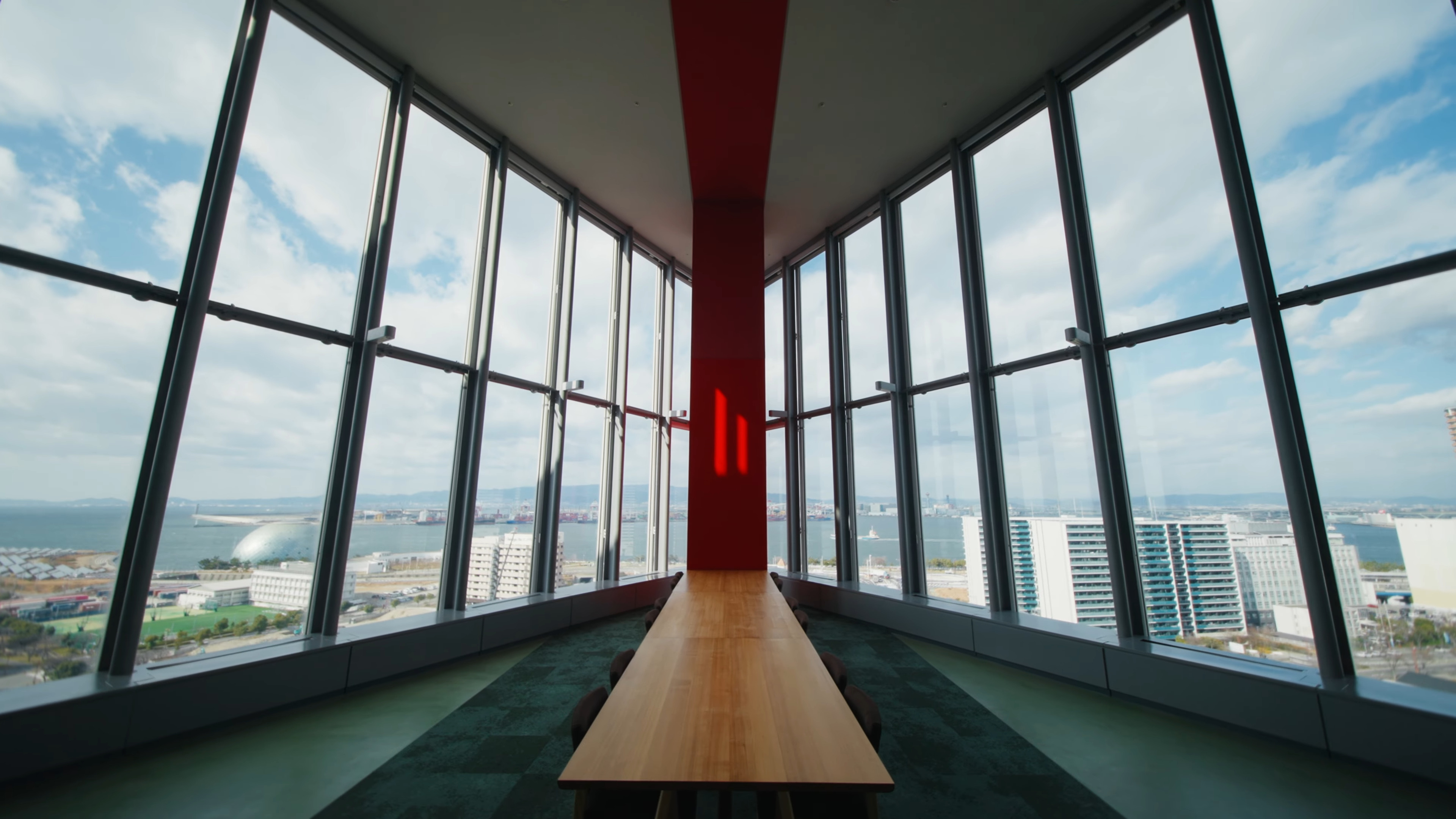
Osaka Exhibition・Event Venue, Conference Room | ATC Hall

Host Halal, Vegan & Kosher Corporate Dinners in Osaka

Instant Answer: Yes, you can host fully compliant halal, vegan, and kosher corporate dinners in Osaka—with professional catering, private venues, and complete menu customization for groups of 15–100 guests.

Planning a corporate dinner where guests follow halal, vegan, or kosher dietary practices doesn't require compromise. Osaka's sophisticated food culture and specialized catering infrastructure make it entirely possible to deliver world-class dining experiences that respect every guest's beliefs and dietary needs. Whether you're entertaining international executives, board members, or strategic partners, the city offers proven solutions that transform dietary requirements into memorable business moments.

This guide covers where to host, how to plan menus, what to expect cost-wise, and the practical steps to ensure your event succeeds—no matter how complex the dietary mix.

The Hidden Challenge: Why Most Venues Fall Short

Instant Answer: Generic hotels and catering companies lack the flexibility, expertise, and local knowledge needed for halal, vegan, and kosher compliance simultaneously.

Most corporate event venues in Japan operate from a "standard catering playbook." They offer generic Japanese, Western, or fusion menus. When a guest requests halal or kosher certification, the kitchen either panics or offers a sad vegetable plate that insults the occasion.

The core problem is structural: mainstream catering operations don't staff for dietary complexity. They don't have certified halal meat suppliers. They've never sourced kosher wine. They don't understand vegan protein substitution well enough to make it elegant.

This matters because your dinner communicates respect—or disrespect—before anyone eats. When your Muslim executive guest sees a "halal meal" that's clearly an afterthought, or your Jewish board member gets a vegetable plate because the kitchen is confused about kosher rules, the message is clear: their presence wasn't anticipated. Their needs weren't prepared for.

The result? Awkward moments. Reduced trust. Missed relationship-building. And worst case—guests who feel unwelcome at an event meant to deepen partnership.

In Osaka, this problem is solvable because the city's culinary sophistication and international business culture have created a small but reliable ecosystem of venues and caterers that specialize in exactly this complexity.

Why Osaka's Food Culture Makes Halal, Vegan & Kosher Dinners Possible

Instant Answer: Osaka combines Japanese precision in food preparation, international ingredient access, and an established network of halal and dietary-specialist caterers.

Osaka isn't Tokyo, which has decades of international cuisine prestige. Instead, Osaka's strength lies in practical, functional catering excellence. The city's 500-year history as a merchant and trading hub created a culture that values preparation, logistics, and meeting customer needs exactly.

Three factors converge to make dietary-compliant dining achievable here:

Japanese Food Culture Aligns With Dietary Restrictions

Japanese cuisine is naturally sympathetic to dietary compliance. The foundation of washoku (traditional Japanese cuisine) is separation and clarity: each ingredient is prepared individually before being brought together. This "separation by default" makes it psychologically natural to prepare halal, vegan, and kosher components on different equipment and timelines.

Vegan cooking in Japan

It is native—Buddhist temple cuisine (shojin ryori) has a 1,200-year tradition of elegant plant-based fine dining. Modern Osaka chefs trained in this tradition understand how to make vegetables the star, not a side thought.

Halal meat handling

Follows many of the same cleanliness and separation principles as Islamic dietary law. Osaka's seafood and meat suppliers are accustomed to strict sourcing and handling protocols—the mindset translates directly.

Kosher meal planning

Requires understanding specific proteins and preparation rules. Japanese kosher caterers exist in the Kansai region, and even mainstream chefs can execute kosher meals competently with advance planning (no shellfish, proper separation of meat and dairy, etc.).

Access to International Ingredients and Suppliers

Osaka Port, one of Japan's busiest container terminals, connects directly to the city's hotel and catering infrastructure. This means access to certified halal meat and seafood from approved suppliers, premium plant-based proteins for vegan menus, and kosher wines and specialty ingredients that would be impossible to source in smaller Japanese cities.

Major international hotel chains operating in Osaka (Marriott, Ritz-Carlton nearby in Kobe, plus dedicated kosher caterers serving the international community) have built reliable supply chains. When you book through these networks, you're tapping into infrastructure that exists specifically to serve dietary compliance.

A Growing International Business Community

Osaka's role as the logistics and manufacturing hub for the Kansai region means a steady influx of international executives and delegations. This has created a small but sophisticated ecosystem of event venues, catering companies, and consultants who specialize in dietary accommodation.

Companies hosting World Expo 2025-related delegations, Korean and Chinese trading partners, Middle Eastern business groups, and Israeli tech delegations have all established relationships with local caterers known for handling complex dietary requirements. These networks are accessible to any corporate event planner willing to plan ahead.

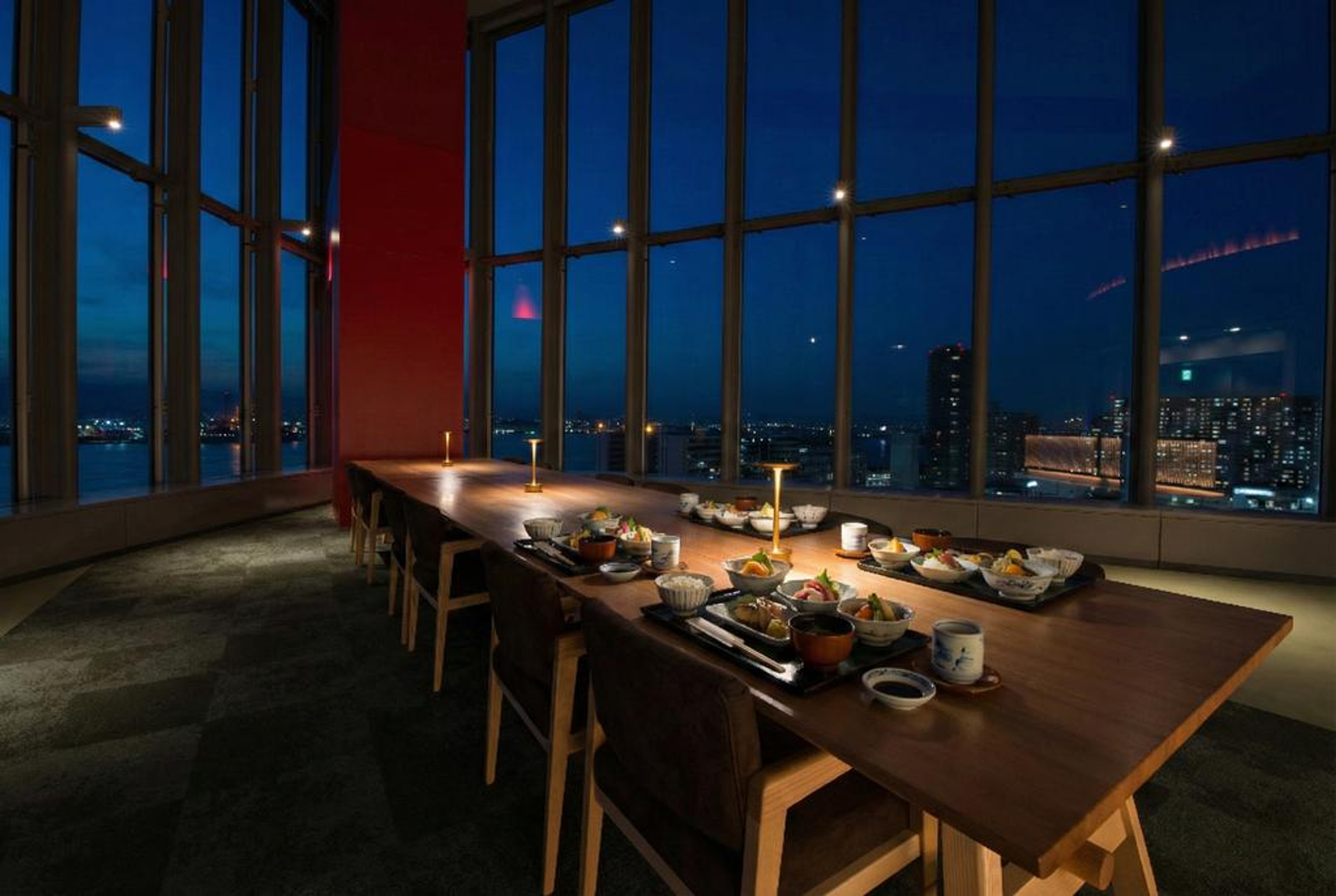
Where to Host: Your Three Best Options in Osaka

Instant Answer: ATC Lounge (luxury private dining), established fine-dining restaurants with private rooms, and specialized catering-focused event spaces offer the best combination of flexibility, expertise, and professional kitchen access.

1. ATC Lounge: Premium Private Dining with Full Kitchen Control

  • Why it works: Operates with a fully equipped on-site kitchen and a kitchen partnership with Plan・Do・See Inc., an international hotel group with proven expertise in multi-dietary menus.
  • Location: 12th Floor, ITM Building, Nanko Bay (15 minutes from central Osaka, direct metro access).
  • Capacity: Seated dinners for 15–25 guests; standing receptions up to 100.
  • Dietary accommodation: Complete. The on-site kitchen can prepare halal, vegan, and kosher courses simultaneously without cross-contamination.
  • Key advantage: In-house prep means no surprise menu substitutions or miscommunications.
  • Cost range: ¥100,000–200,000 for venue + kitchen; catering separate but typically ¥8,000–15,000 per person.
  • Best for: Board dinners, VIP client entertainment, strategic partner dinners.

View available private dining dates at ATC Lounge (English)

2. Established Fine-Dining Restaurants with Private Rooms

Why it works: Osaka's top-tier restaurants (kaiseki, Italian, French fine dining) often operate private rooms with chef-owner relationships, making dietary customization easier than chain hotels.

Recommended approach: Contact restaurants 4–6 weeks ahead. Best for smaller groups (12–20 people) looking for custom menus (Cost range: ¥6,000–18,000 pp).

3. Dedicated Catering Companies Specializing in Dietary Compliance

Why it works: A growing network of catering companies that specialize in halal, kosher, and plant-based corporate events. They handle certification and sourcing.

Key advantage: Professionals at managing mixed-requirement events. Best for mid-to-large events (25–100 people). (Cost range: ¥5,000–12,000 pp).

Planning a Compliant Menu: The Step-by-Step Process

Instant Answer: Halal requires certified meat sources and Islamic handling; kosher requires no shellfish, meat-dairy separation, and ideally certified providers; vegan needs plant-based proteins and sauce verification.

Understanding the Three Dietary Frameworks (Matrix)

← Swipe to view full matrix →
Requirement Applies To Key Sourcing/Handling Rules Easiest Proteins to Adapt
Halal Meat & Poultry Certified halal butcher required; Islamic slaughter technique; No pork cross-contamination Grilled lamb, halal beef, seafood, poultry
Kosher Meat & Dairy No shellfish, no pork. Strict separation of meat & dairy courses/tools. Grilled fish (fins/scales), beef/lamb (certified)
Vegan All Animal Byproducts No meat, fish, dairy, eggs, honey. Verify base sauces (e.g., hidden dashi). Grilled veg, tofu, edamame, legumes

The Planning Timeline & Checklist (Swipe/Click to Navigate)

Step 1: 8-10 Weeks

Initial Consultation

Confirm guest count/requirements. Contact venue to request dietary compliance process.

Step 2: 6-8 Weeks

Menu Strategy

Menu planning call with chef. Verify halal/kosher certifications.

Step 3: 4-6 Weeks

Logistics Alignment

Approve draft menu. Discuss table setup and specialized equipment needs.

Step 4: 2-4 Weeks

Final Validation

Finalize all logistics and confirm requirement counts one last time.

Step 5: 1 Week Out

Execution Brief

Provide final headcount, seating charts, and brief the catering/service teams.

A Sample Multi-Dietary Menu (15 Guests)

  • Cocktail Reception: Vegetable crudités with hummus, Grilled shrimp, Grilled vegetable skewers (all naturally compliant or flexible).
  • First Course: Halal (Grilled lamb), Kosher (Sashimi platter), Vegan (Mushroom & eggplant terrine).
  • Second Course: Prepped on separate equipment. Halal beef, Kosher sea bass, Vegan Cauliflower steak.
  • Dessert: Fresh fruit salad with mint.
  • Cost estimate: ¥10,000–¥14,000 per person.

Real-World Examples: What Success Looks Like

Instant Answer: Companies that plan 6–8 weeks ahead, communicate dietary requirements clearly, and work with experienced caterers report 100% satisfaction—with no visible compromise to the dining experience.

Case Study 1: A Pharma Board Dinner

Requirement: Halal for Dubai executive, flexible for Japanese board members.

Approach: 6 weeks advance notice. ATC Lounge sourced halal beef from Kansai. Menu: grilled halal lamb + Japanese sides.

Result: "The lamb was exceptional. The catering team understood halal from the first call." (Cost: ¥150,000 venue + ¥12k/pp, 5 guests)

Case Study 2: Tech Investor Dinner

Requirement: 1 kosher, 1 vegan, 6 flexible.

Approach: 4 weeks notice. Kosher wine sourced, meat/dairy separated. Vegan guest received plant-forward courses without fanfare.

Result: "Nobody at the table felt accommodated. Everyone felt hosted." (Cost: ¥180,000 venue + ¥9k/pp, 8 guests)

Case Study 3: Logistics Client Event

Requirement: 4 halal, 3 vegan, 2 kosher, 16 flexible.

Approach: 8 weeks notice. Dedicated catering managed meat sourcing. Distinct table cards indicated dietary profile.

Result: "Clients felt seen. It's hard to negotiate feeling like an afterthought." (Cost: ¥220,000 venue + ¥11k/pp, 25 guests)

Practical Logistics: Service Style, Plating & Communication

Instant Answer: Invisible plating (guests don't notice variations) is possible and preferable. Key: communicate with waitstaff and use discreet labeling.

Service Styles That Work

  • Option 1: Individual Plating (Small Groups) – Each requirement plated separately. Pros: Elegant, full control. Cons: Kitchen complexity.
  • Option 2: Shared-Service Platter – Shared veg/sauces; individual protein delivery. Pros: Community feel. Cons: Dietary variations are visible.
  • Option 3: Pre-Plating with Discreet Cards – Small cards indicate dietary profile. Pros: Zero server confusion. Cons: Labels are visible.

Briefing the Service Team

  1. Walk the waitstaff through the dietary requirements (show seating diagram).
  2. Label each plate in the kitchen with a discreet system (H, K, V).
  3. Establish hand signals between the lead server and kitchen.
  4. Have a backup if a requirement is forgotten mid-course.

Cost Breakdown: What to Budget

Instant Answer: Compliance adds ¥1,000–3,000 per person to baseline catering costs depending on menu complexity.
← Swipe to view full table →
Menu Tier Base Cost Dietary Surcharge Total Cost (per person)
Casual (set meals, limited options)¥4,000–6,000+¥500–1,000¥4,500–7,000
Mid-range (multi-course)¥7,000–10,000+¥1,000–2,000¥8,000–12,000
Premium (fine dining, full custom)¥12,000–18,000+¥2,000–3,000¥14,000–21,000

Hidden Costs: Halal meat (+¥1,000–2,000/pp), Kosher wine (¥3,000–8,000/bot), Kitchen planning fee (¥10,000–20,000).

Common Mistakes to Avoid

  • Insufficient Planning Time: Sourcing halal/kosher takes 6-8 weeks minimum.
  • Confusing Vegetarian with Vegan: Vegan allows no dairy/eggs.
  • Zero Kitchen Communication: Brief the chef early, not 2 days before.
  • Venues Without Real Kitchens: Shared, high-volume hotel kitchens struggle to isolate prep surfaces.
  • Assuming Halal without Docs: Halal requires certification papers, not just "handling carefully".
Expert Tip: The Red Flags to Avoid When Vetting a Caterer
If they say "we buy meat from a standard wholesaler," they aren't serving halal. If they use shared fryers for vegan dishes, they aren't vegan compliant. Always ask for their written dietary accommodation process before booking.

FAQ: Your Halal, Vegan & Kosher Dining Questions Answered

Is it expensive to accommodate halal, vegan, and kosher guests at the same dinner?

Dietary accommodation adds ¥1,000–3,000 per person to baseline catering, but this isn't a "premium tax"—it's the real cost of sourcing certified halal meat, handling kosher separation, and planning vegan proteins carefully. Plan for ¥10,000–15,000 per person for quality multi-dietary fine dining in Osaka. For a 20-person dinner with mixed requirements, ¥11,000 per person (about $75 USD) is standard fine dining cost for Japan.

Can a mainstream Japanese restaurant accommodate halal without specialized sourcing?

Not reliably. Halal requires documented sourcing from a certified halal butcher. A restaurant that sources from a standard Japanese meat wholesaler cannot claim halal compliance, even if the meat is handled "carefully." Ask directly: "Where do you source halal meat?"

What's the difference between "kosher-friendly" and actually kosher?

"Kosher-friendly" means the cuisine doesn't inherently violate kosher law (no shellfish, no pork), but it's not certified kosher. True kosher requires certified suppliers, separate prep surfaces, and documented handling. The simplest corporate path: hire a kosher caterer or venue with certification.

Can I serve multiple dietary requirements on a single menu if I'm careful?

Partially. Vegan and flexible can share vegetable components, but strict meat sourcing makes true 1-for-1 sharing difficult. Plan 2-3 core dishes and allow dietary swaps on proteins.

How much advance notice does a caterer need?

Vegan: 4-6 weeks. Halal: 6-8 weeks (certified pre-orders). Kosher: 8-10 weeks (imported wine options). If planning all three, 8-10 weeks minimum.

Do I need to disclose to guests which dishes are halal/vegan/kosher?

Both approaches work. Invisible service (no labels) is elegant and preferred by upscale events. Transparent service (discreet labels) is practical and eliminates server confusion for diverse groups.

What if a guest arrives with an unannounced dietary requirement?

Prevention is best: send a confirmation email 1 week prior. As backup, have a simple protein (grilled fish/veg) available for the kitchen to sub without issue.

Can I order meals from delivery services instead?

Delivery-only services don't control final plating and service. For a professional B2B dinner, use a full-service caterer physically present at the venue to ensure strict compliance.

Is ATC Lounge the only venue in Osaka that can handle all three dietary requirements?

No, but it's one of the best. Any premium venue with dedicated kitchen access and a willingness to plan 6–8 weeks ahead (like high-end hotels) can coordinate this. Dedicated kitchen control is more important than location.