Too Big for a Restaurant, Too Small for a Ballroom? The Venue Solution for 20 Guests in Osaka
Corporate event planners face a persistent "Goldilocks problem"—traditional restaurants lack the privacy and equipment for executive entertainment, while hotel ballrooms feel impersonal for small groups. Discover why purpose-built spaces for 15–25 guests are transforming business gatherings in Osaka.
Where can you host an intimate corporate dinner for 20 people in Osaka? The answer isn't in oversized hotel ballrooms or cramped restaurant corners. Dedicated intimate venues designed for 15–25 guests offer the privacy, flexibility, and ambiance that transform business gatherings into relationship-building opportunities.
Why 20-Guest Events Feel Awkward in Most Venues
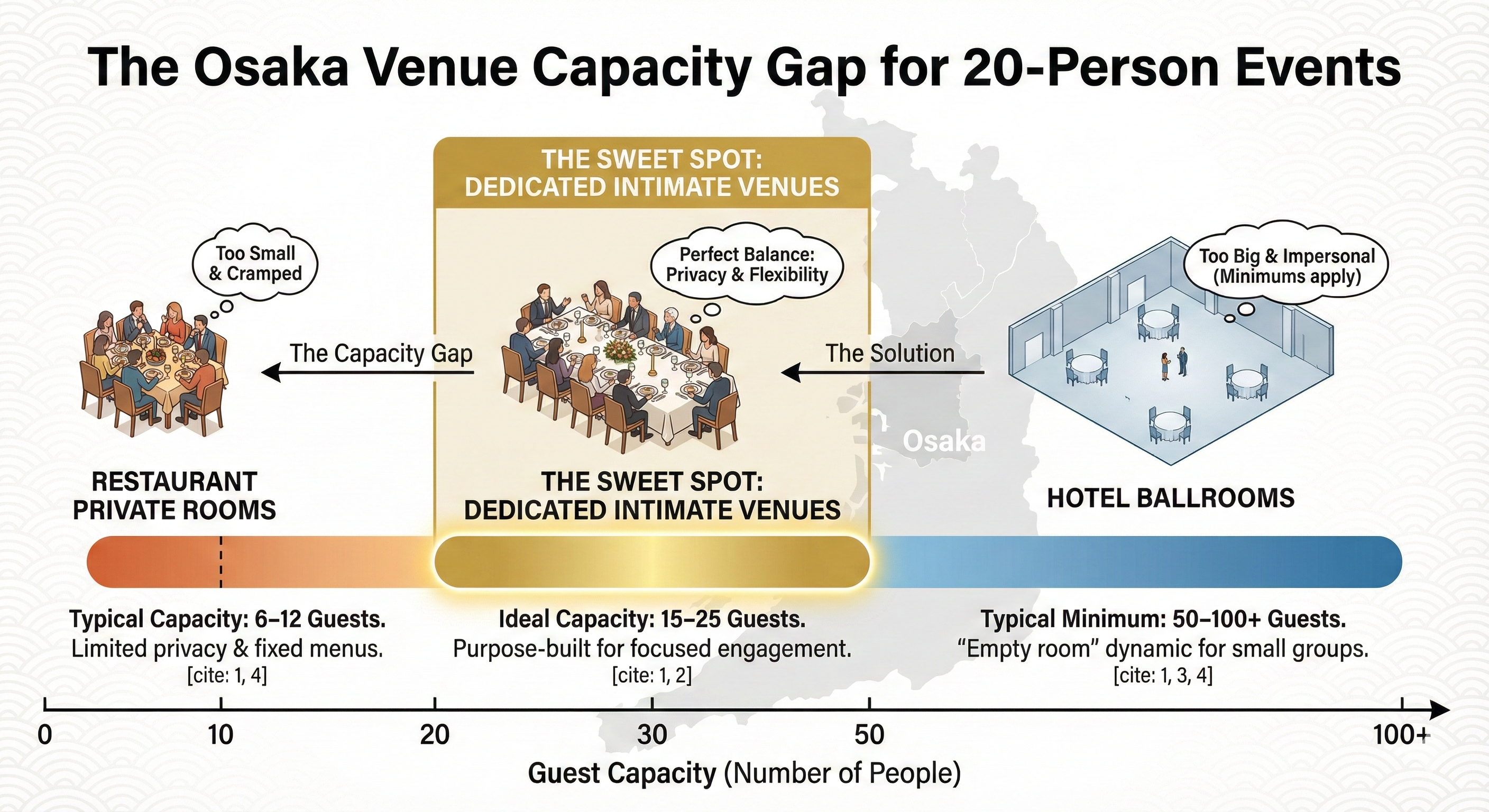
Most Osaka restaurants cap private room capacity at 6–12 guests, while hotel ballrooms require 50–100 minimum bookings.
Research by corporate hospitality leaders shows that smaller, more intimate settings are increasingly in demand for 2024–2025 business events. Yet the infrastructure hasn't caught up. High-end restaurants like those featured in Michelin guides typically offer private rooms for 4–12 diners, making them unsuitable for mid-sized corporate gatherings. Meanwhile, hotel ballrooms like Patina Osaka's 300-capacity space or typical facilities holding 500+ guests create awkward "empty room" dynamics for groups under 30.
This capacity gap forces event planners into compromises: dividing teams across multiple restaurant tables or paying for ballroom space they don't need. Neither option delivers the exclusivity and focused atmosphere that executive entertainment demands.
Venue capacity ranges reveal a clear gap: restaurants max out at 12 guests while ballrooms start at 50+, leaving 20-guest events underserved.
The Hidden Cost of "Making Do" with Wrong-Sized Venues
Using oversized venues for small groups inflates per-guest costs while undermining the intimacy that makes business dinners effective.
Standard hotel ballrooms use 60-inch round tables that consume excessive space and prevent natural conversation flow. When only 20 people occupy a 300-capacity ballroom, guests feel scattered rather than connected. Conversely, squeezing into a restaurant private room designed for 10 means limited AV capabilities, fixed menus with little customization, and strict time windows.
The psychology matters, too. Private dining settings increase deal probability by 3.2 times compared to public venues. Groups of 15–25 create optimal conversation flow for business relationship-building—small enough for everyone to interact, large enough to feel significant. Venues that don't match this sweet spot dilute the strategic advantage of face-to-face entertaining.
For companies seeking the right balance, purpose-built intimate venues in Osaka's Bay area now fill this critical gap—offering the professional infrastructure of a ballroom with the warmth of a private dining room.
What Dedicated 20-Person Venues Actually Offer
Purpose-built intimate venues provide full menu control, professional AV equipment, and flexible scheduling that restaurants and ballrooms cannot match.
True dedicated spaces for 20-guest events deliver operational advantages competitors lack. On-site kitchens enable complete menu customization without outsourcing to external caterers. Full audiovisual infrastructure supports presentations and multimedia content impossible in typical restaurant settings. Moreover, flexible timing removes the turnover pressure common in dining establishments.
Design elements also distinguish these spaces. Authentic Japanese craftsmanship combined with modern luxury creates environments that impress international partners while respecting cultural context. Panoramic views—rare in central Osaka but available in waterfront locations like the Osaka Bay area—provide memorable backdrops that enhance the occasion.
Purpose-built venues for 15–25 guests combine professional infrastructure with intimate atmospheres impossible to replicate in restaurants or ballrooms.
Restaurant Private Rooms vs. Dedicated Event Venues
Restaurant private rooms offer culinary excellence but lack the technical flexibility and time control that dedicated venues provide.
Michelin-starred restaurants in Osaka's Umeda and Kitashinchi districts feature exceptional private dining. Establishments like those featured in OMAKASE guides accommodate up to six guests in sound-insulated rooms ideal for confidential business discussions. However, these spaces typically enforce fixed multi-course menus, limited seating durations of 2–3 hours, and minimal equipment beyond basic lighting.
In contrast, dedicated event venues permit extended gatherings of 4–6 hours with complete control over food presentation, service timing, and technical requirements. For events requiring product demonstrations, video presentations, or photography, this flexibility proves essential. Pricing structures differ as well: restaurant private rooms charge per person (¥8,000–¥15,000+ for high-end establishments), while dedicated venues use flat rental rates (¥180,000–¥200,000) that become cost-effective for groups approaching 20.
Osaka Venue Options for 20-Guest Corporate Events: Decision Matrix
Venue Type
Capacity Range
Privacy Level
Menu Flexibility
AV Included
Typical Cost
Best For
Restaurant Private Room
6–12
High
Low (fixed menu)
Minimal
¥160k–¥300k+
Pure dining experience
Hotel Small Meeting Room
10–20
Medium-High
Medium
Standard
¥150k–¥250k+
Formal meetings + dining
Hotel Ballroom
50–300+
Medium
High
Comprehensive
¥300k+
Large-scale events only
Dedicated Intimate Venue
15–25
Very High
Very High
Full suite
¥180k–¥200k+
Executive entertainment
Traditional Ryōtei
8–20
High
Low (traditional)
Minimal
¥200k–¥350k+
Cultural experiences
Hotel Meeting Spaces: When to Skip the Grand Ballroom
Hotel ballrooms excel at large-scale events but create intimacy challenges and higher costs for groups under 30.
International hotels in Osaka offer sophisticated meeting facilities. Patina Osaka provides a dedicated 20-capacity room called Kiri, bridging the gap between intimate and expansive spaces. Similarly, InterContinental Osaka features smaller boardrooms alongside its grand ballrooms. These represent the exception rather than the rule.
Most hotel event spaces fall into two extremes: boardrooms seating 6–10 or ballrooms accommodating 100–300+. The infrastructure, from lighting to sound systems, is designed for larger gatherings. Consequently, a 20-person dinner in a 200-capacity ballroom requires strategic furniture placement and lighting adjustments to avoid the "empty warehouse" effect.
For corporate clients, one practical approach is directly comparing venue capacities against confirmed guest counts—choosing spaces with maximum capacity 25–50% above actual attendance creates comfortable margins without excessive emptiness.
Osaka Bay's Strategic Advantage for Business Entertainment
Waterfront venues in the Osaka Bay area offer proximity to Expo 2025, panoramic views, and convenient access from Kansai International Airport.
The Nanko Bay area, located in Osaka's Suminoe ward, sits approximately 15–20 minutes from central Osaka (Umeda) via Osaka Metro New Tram. This location provides unique advantages for international business entertainment. Kansai Airport lies roughly 40 minutes away, making bay-area venues accessible for executives with tight schedules.
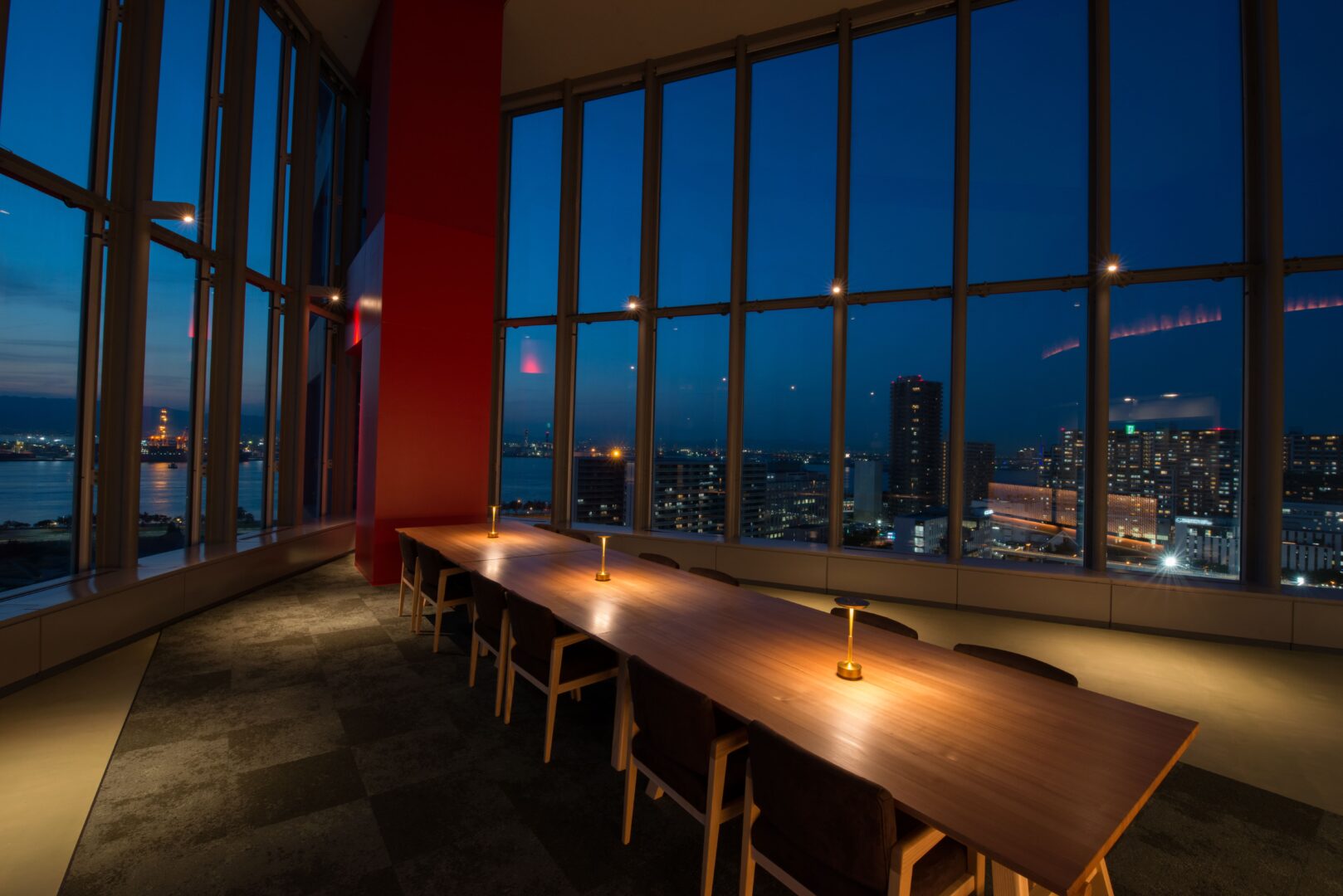
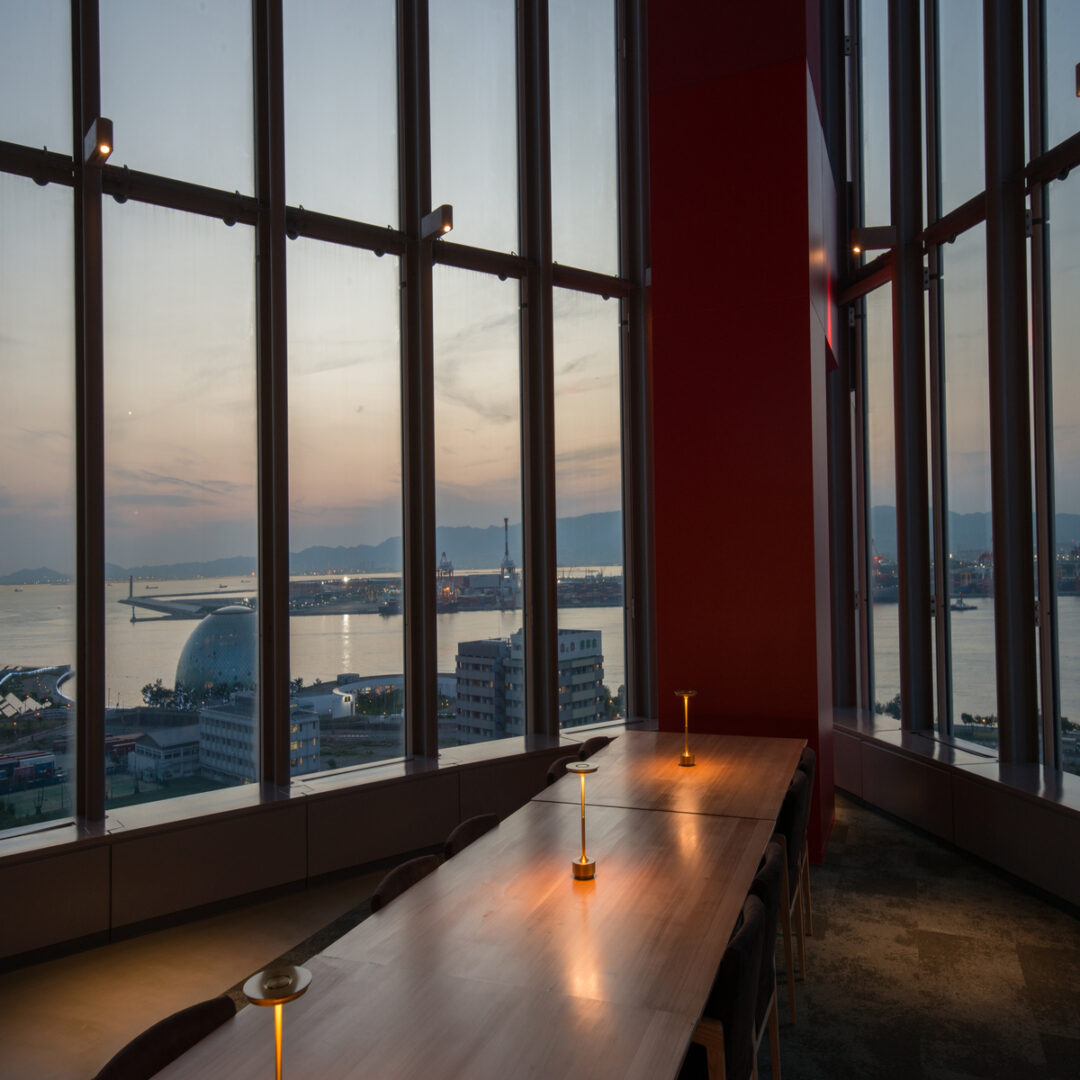
Expo 2025 Osaka Kansai will take place on nearby Yumeshima island from April to October 2025. Companies hosting international partners during the Expo period benefit from waterfront venues that combine business functionality with attraction proximity. Additionally, venues like ATC LOUNGE—a 160-square-meter space designed for 15–25 guests—feature floor-to-ceiling windows overlooking the bay, creating distinctive visual experiences uncommon in urban hotel settings.
Budget Reality: What 20-Person Venues Cost in Osaka
Dedicated intimate venues typically range from ¥180,000–¥200,000 for full rental, while restaurant private dining and hotel spaces vary based on per-person or time-based pricing.
Understanding venue economics helps planners allocate budgets effectively. High-end restaurant private rooms charge ¥8,000–¥15,000+ per person for Michelin-level establishments. For 20 guests, this totals ¥160,000–¥300,000+ before beverages and service charges. Four Seasons Osaka private dining for 5–12 guests begins around ¥250,000. Hotel meeting spaces often combine base rental fees (¥50,000–¥150,000) with minimum food and beverage requirements.
Dedicated event venues use flat rental models: ATC LOUNGE quotes ¥180,000–¥200,000 for exclusive use with full kitchen access and no external catering requirements. This pricing includes the space, basic AV equipment, and flexible 4–6 hour windows. Additional costs involve catering (¥8,000–¥12,000 per person for premium menus), beverages, and optional technical upgrades. Transparent pricing structures benefit corporate finance teams requiring precise budget forecasting.
Choosing by Event Type: Client Entertainment vs. Team Celebrations
Client entertainment demands maximum privacy and prestige, while team celebrations prioritize relaxed atmosphere and memorable experiences.
Event objectives shape venue requirements dramatically. High-stakes client dinners benefit from locations signaling corporate seriousness—waterfront views, authentic Japanese design elements, impeccable service standards. These settings justify premium investment because they contribute directly to relationship advancement and deal acceleration.
Team celebrations and executive retreats shift priorities toward creating meaningful connections with a relaxed vibe. Smaller corporate gatherings foster the interpersonal bonds that large impersonal events cannot achieve. For international partner hosting, balancing cultural authenticity with modern expectations becomes paramount—venues featuring traditional kumiko woodwork or Japanese garden elements paired with contemporary amenities satisfy both local tradition and global business norms.
When entertaining international visitors, consider logistical factors like translation services, dietary accommodation capabilities, and cultural programming options (traditional performances, tea ceremonies, etc.). Venues experienced in multinational events typically maintain relationships with these service providers.
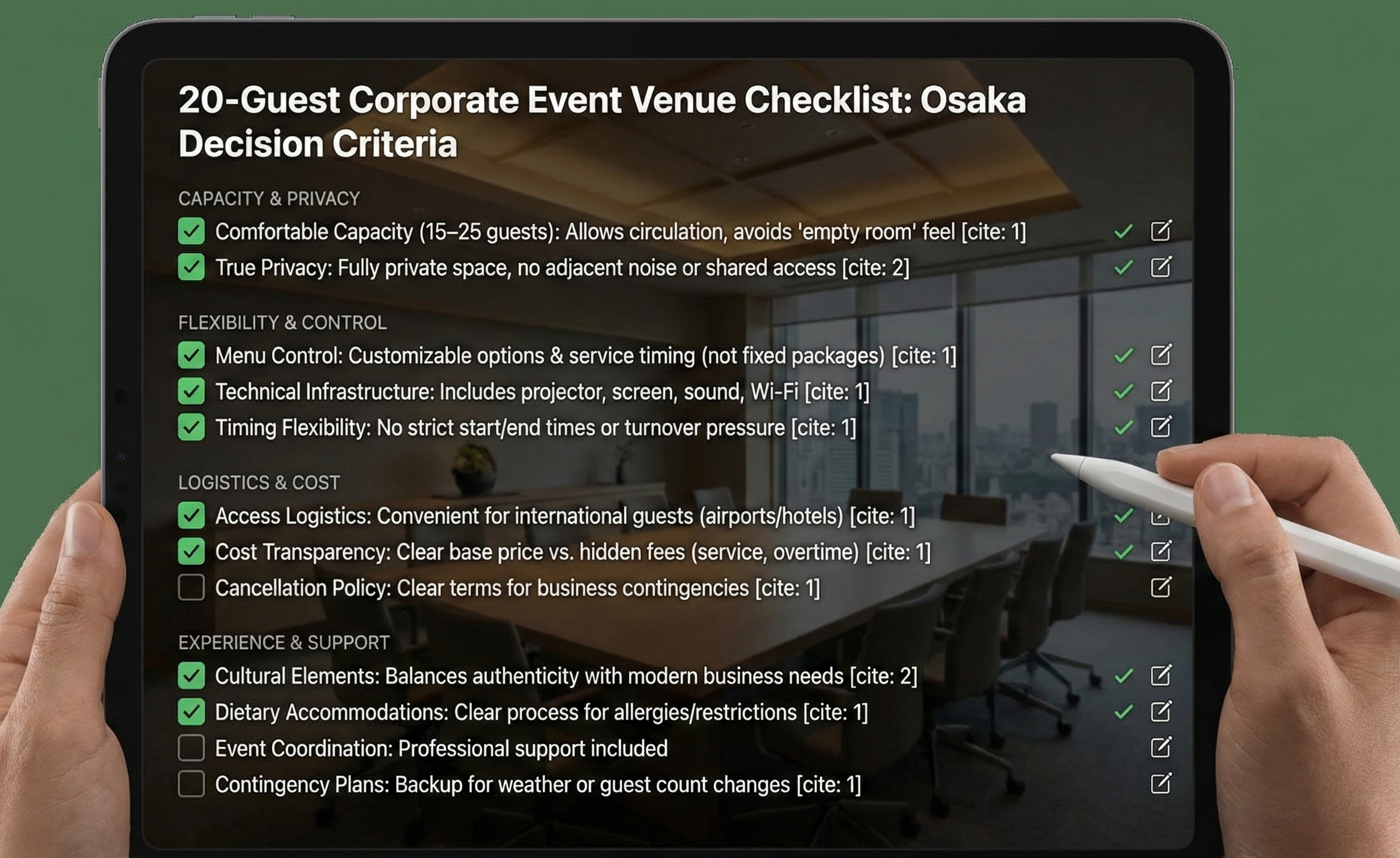
Your Venue Selection Checklist for 20-Guest Events
Evaluate venues based on capacity sweet spot, operational flexibility, cultural authenticity, and total cost transparency.
Before booking, confirm these critical factors:
Comfortable capacity range: Does the space accommodate 15–25 seated guests without feeling cramped or empty?
True privacy: Is the venue fully private, or will adjacent events create noise/distraction?
Menu control: Can you customize dishes and service timing, or must you accept fixed packages?
Technical infrastructure: What AV equipment is included (projector, sound system, lighting control, Wi-Fi bandwidth)?
Timing flexibility: Are there strict start/end times or turnover pressure?
Access logistics: How convenient is the location for international guests (proximity to airports, hotels, public transit)?
Hidden costs: What's included in base pricing versus additional fees (service charges, equipment rental, overtime)?
Cultural elements: Can the venue arrange Japanese hospitality touches or traditional performances if desired?
Request site visits whenever possible. Observe natural lighting at your event's planned time of day, test acoustics, and evaluate staff responsiveness. For corporate events with recurring potential, discuss long-term partnership rates and priority booking arrangements.
A systematic approach to venue evaluation ensures you select a space that matches both your event objectives and operational requirements.
Making Your Final Decision: Site Visits and Consultations
Schedule consultations with shortlisted venues to discuss customization options and clarify service inclusions before committing.
Professional venue teams should offer consultative planning support, not just transactional bookings. During consultations, clarify equipment capabilities (can the space support your presentation format?), dietary accommodation processes (how are allergies and religious restrictions handled?), and contingency plans (what if guest counts change or weather affects outdoor elements?).
Document everything in writing: finalized floor plans, confirmed menus with pricing, equipment lists, and cancellation policies. For high-value corporate events, consider hiring professional event coordinators familiar with Osaka's venue landscape—they negotiate better rates and anticipate logistical challenges.
Ultimately, the right venue reflects your company's values while prioritizing guest experience. When the setting aligns with your event's purpose—whether that's closing an international deal, celebrating team achievements, or hosting VIP partners—it amplifies your message and creates lasting impressions. To explore a venue purpose-built for 20-guest excellence, request a consultation with ATC Lounge.
Frequently Asked Questions
What is the ideal venue size for a 20-person corporate dinner?
Venues designed for 15–25 guests create optimal intimacy without cramping. Spaces slightly larger than your guest count (by 15–30%) provide comfortable circulation while maintaining the focused atmosphere essential for relationship-building events.
How much does a private event space for 20 guests cost in Osaka?
Pricing varies by venue type. Dedicated event venues charge ¥180,000–¥200,000 for flat rental, high-end restaurants cost ¥160,000–¥300,000+ based on per-person rates (¥8,000–¥15,000/guest), and hotel spaces combine base fees (¥50,000–¥150,000) with food/beverage minimums. Total costs including catering typically range ¥300,000–¥500,000.
What's the difference between a restaurant private room and a dedicated event venue?
Restaurant private rooms offer culinary excellence but limit technical capabilities, menu flexibility, and time control. Dedicated venues provide full AV infrastructure, customizable catering, extended hours (4–6+ hours vs. 2–3), and operational freedom essential for presentations or product demonstrations. Choose restaurants for pure dining experiences, dedicated venues for multifaceted business events.
Can I customize the menu at a private event venue in Osaka?
Dedicated event venues with on-site kitchens typically offer complete menu customization. You can collaborate with chefs on specific dishes, accommodate dietary restrictions, adjust service timing, and even incorporate cultural elements like traditional Japanese presentations. Restaurant private rooms usually offer limited customization within fixed multi-course frameworks.
How far is Osaka Bay from central Osaka business districts?
Osaka Bay (Nanko area) sits approximately 15–20 minutes from central Osaka (Umeda/Namba) via Osaka Metro New Tram. Kansai International Airport lies roughly 40 minutes away by direct transport. The area's accessibility makes it practical for international executives while offering unique waterfront ambiance unavailable in urban centers.
What venues in Osaka offer both privacy and panoramic views?
Waterfront venues in the Osaka Bay area provide rare combinations of complete privacy and expansive views. Central Osaka hotels occasionally offer skyline views, but fully private spaces with panoramic water vistas are concentrated in bay-area locations like Suminoe ward. These venues leverage their geographic position to deliver memorable visual experiences alongside business functionality.
Do Osaka event venues provide AV equipment for presentations?
Dedicated event venues typically include basic AV equipment (projector, screen, sound system, microphone) in base rental fees. Advanced requirements like streaming equipment, professional lighting, or simultaneous translation systems incur additional charges. Always confirm specific equipment lists and test technical setups during site visits to avoid event-day surprises.
What should I consider when choosing a venue for international clients?
Prioritize cultural authenticity paired with international service standards, dietary flexibility, convenient access from airports/hotels, and translation capabilities. Venues experienced in multinational events understand the balance between respecting Japanese hospitality traditions and meeting global business expectations. Confirm availability of English-speaking staff and Western amenity options (chair seating vs. tatami, cutlery options).
Written by
ATC Editorial Team
The ATC Editorial Team brings over two decades of experience in corporate hospitality and event management across the Osaka Bay area. Our writers specialize in helping international business professionals discover premium venues that balance Japanese cultural authenticity with modern corporate requirements. Based at the Asia & Pacific Trade Center, we provide insider perspectives on Osaka's evolving event landscape.